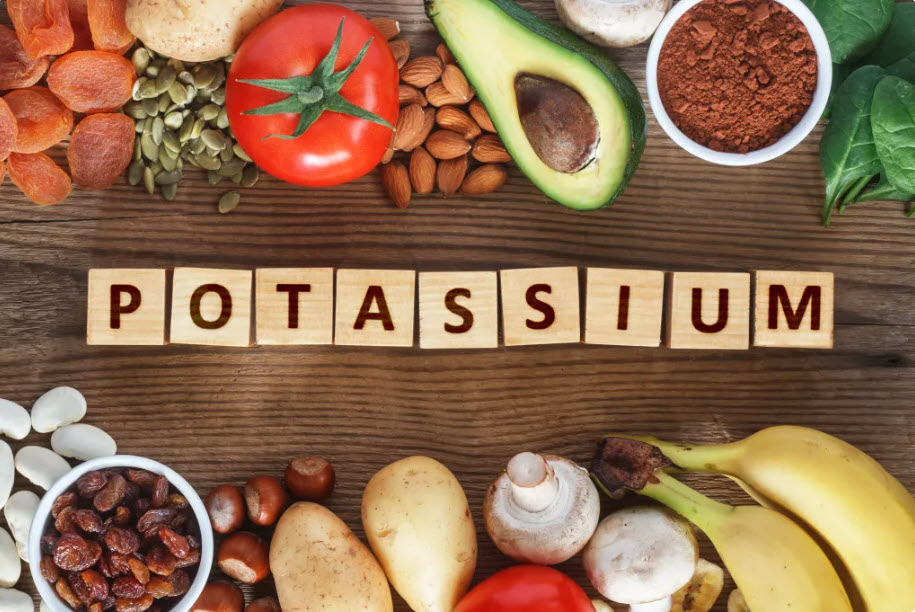
You finish a hard, sweaty workout and reach for water. Good — but water alone puts back only part of what you lost. Sweat carries electrolytes out with it, and the one most people never properly replace isn’t sodium. It’s potassium.
Sodium gets all the attention: the salt tab, the bright-blue sports drink. But potassium is the electrolyte working inside your cells — it’s what lets a muscle contract, a nerve fire, and your fluid balance hold steady. It’s also the hardest to get back from a pinch of salt, and a single banana doesn’t come close. That gap is the whole reason this drink exists.
The idea behind it (thank you, Dr. Berg)
The starting point comes from Dr. Eric Berg, who makes the case that a hard training day needs real electrolyte replacement — and that you can build it yourself from food instead of buying a sugar-loaded sports drink. Per Berg, a male athlete’s potassium need runs around 6,000 mg a day, well above the ~3,400–4,700 mg most guidelines quote.
His homemade version — avocado, blueberries, lemon, a little apple cider vinegar and sea salt — lands at roughly 1,000 mg of potassium. That’s the “one K” this recipe is named for. Bare One K is our barefoot, expanded take on it: the same whole-food spirit, scaled up with more potassium sources, soaked seeds for minerals and fiber, greens, anti-inflammatory aromatics, and a few recovery cofactors — all in one blended glass.
Built out the way it’s written below, it delivers ~2,400 mg of potassium — about 40% of Berg’s athlete target in a single drink — alongside a full electrolyte spread (sodium, calcium, magnesium, and chloride). It’s less a “sipper” and more a dense, meal-sized recovery glass.
Why all the extras?
A banana would give you potassium. So why thirty-odd ingredients? Because recovery isn’t just potassium — and because every addition is pulling its weight:
- The soaked seeds (chia, flax, sesame, pepitas, hemp) bring magnesium, omega-3s, plant protein, and fiber. Soaking softens them and makes them blend smooth.
- Cream of tartar is the quiet hero — it’s potassium bitartrate, the single biggest potassium source in the glass.
- Coconut water, spinach, dried apricot, and beet stack on more potassium (and the beet brings nitrates for circulation).
- Turmeric, ginger, cinnamon, and cayenne are the anti-inflammatory, warming notes — a framing Dr. Livingood leans on for post-exertion recovery. (The black pepper is there on purpose: its piperine helps your body absorb turmeric’s curcumin.)
- Inulin and a monk-fruit-plus-allulose sweetener keep it gut-friendly and low-glycemic — Dr. William Davis points to allulose as a prebiotic-type fiber, and Dr. Gundry likes monk fruit for the same gut reasons.
- Collagen, hemp protein, bromelain, and papain round out recovery — protein for repair, enzymes for digestion.
The recipe (one serving)
It looks like a lot, but it comes together in two moves: soak overnight, then blend. Group the ingredients the way you’ll handle them.
Soak overnight (combine in a glass with ~1 cup water; refrigerate):
| Ingredient | Amount |
|---|---|
| Chia seeds | 1 tbsp |
| Flax seeds | 1 tbsp |
| Sesame seeds | 1 tbsp |
| Pumpkin kernels (pepitas) | 1 tbsp |
| Hemp hearts | 1 tbsp |
| Fenugreek seeds | 1 tsp |
| Fennel seeds | 1 tsp |
| Cardamom seeds | 4 |
| Cloves, whole | 4 |
| Dried apricot | 3 |
Liquids:
| Ingredient | Amount |
|---|---|
| Filtered water | 10 fl oz |
| Coconut water | ¾ cup |
Produce:
| Ingredient | Amount |
|---|---|
| Spinach | ½ cup |
| Whole lemon | ½ |
| Beet | ⅛ |
| Fresh ginger | ½" piece |
| Fresh turmeric | ½" piece (or ½ tsp powder) |
| Apple cider vinegar | 1 tbsp |
| Extra-virgin olive oil | 1 tbsp |
Powders & spices:
| Ingredient | Amount |
|---|---|
| Hemp protein powder | 1 tbsp |
| Inulin powder | 1 tbsp |
| Psyllium husks | 2 tbsp |
| Collagen peptides | 1 tbsp |
| Monk fruit + allulose sweetener | 1 tbsp |
| Cinnamon | 1 tsp |
| Siberian ginseng (eleuthero) powder | 1 tsp |
| Moringa powder | 1 tsp |
| Bromelain | 1 tsp |
| Papaya (papain) | 1 tsp |
| Cream of tartar | 1 tsp |
| Unsweetened cacao powder | 1 tsp |
| Barberry root bark powder | 1 tsp |
| Celtic sea salt | ¼ tsp |
| Cayenne pepper | ⅛ tsp |
| Black pepper, fresh ground | ⅛ tsp |
| Bitter melon powder | ⅛ tsp |
| Maitake mushroom powder | ⅛ tsp |
Optional: ¼ avocado for creaminess and another ~175 mg potassium; a splash of sparkling water if you like it fizzy.
How to make it
- The night before, soak the seeds. Combine the soak-group seeds and the dried apricots in a glass with about a cup of water and refrigerate overnight. Soaking softens everything, starts breaking down the natural phytates in seeds, and lets it all blend smooth.
- Blend. Tip the soaked seeds (water and all) into a high-speed blender with the liquids, produce, and all the powders. Blend 30–45 seconds until smooth.
- Finish how you like it. Strain it if you want it silkier, add the avocado for body, or a splash of sparkling water for fizz. Serve over ice or at room temperature.
It keeps in the fridge for about a day, but it’s best fresh — the chia and psyllium keep thickening as it sits, so shake or re-blend before your next glass.
When to drink it
Right after a hard, sweaty session — that’s the moment it’s built for, when you’ve actually spent the electrolytes it’s putting back. It also makes a dense, greens-and-minerals morning drink if that suits you better.
One thing to set expectations on: this is not a stimulant. There’s no caffeine. The lift you feel is electrolytes, a little fast fuel from the coconut water and apricot, the adaptogenic eleuthero, and the warmth of the spices — not a jolt.
A few honest cautions
Most of these are about who should check with a doctor first — and with a drink this loaded, that matters:
- It’s a big potassium dose. Well over 2,000 mg in one glass. From whole food, with healthy kidneys, that’s exactly the point and your body handles it. But if you have kidney disease, or you take a potassium-sparing diuretic, an ACE inhibitor, an ARB, or a potassium supplement, this much potassium can stack up dangerously — clear it with your doctor first.
- Pregnant or breastfeeding? Skip the barberry. Barberry root bark (berberine) isn’t recommended in pregnancy. If that’s you, leave it out — or skip the drink.
- On diabetes medication? Barberry, bitter melon, cinnamon, and fenugreek all nudge blood sugar down. Stacked on insulin or other glucose-lowering meds, they can push it too low — go easy and monitor.
- On a blood thinner, or heading into surgery? Bromelain, papain, turmeric, and ginger are all mildly blood-thinning on their own; together they add up. Check with your doctor.
- Go easy on the fiber and the heat at first. This is a high-fiber drink — the psyllium and chia thicken it fast, so blend it, drink it reasonably promptly, and chase it with a glass of water. Inulin and allulose are FODMAPs (gas and bloating for some), so start with less if your gut is sensitive. The cayenne, black pepper, and vinegar can also bite on an empty stomach. (And never inhale dry psyllium powder.)
- Don’t be alarmed by pink urine. That’s the beet (beeturia), and it’s harmless.
The barefoot part
A tub of electrolyte powder is a list of things you can’t pronounce, dyed a color that doesn’t occur in nature. This is a glass of food — seeds you soaked overnight, a handful of spinach, coconut water, a little turmeric and ginger — every one of which you can name and picture growing.
You made it, so you know what’s in it, and you know why each piece is there. That’s the whole idea around here: fewer, better things, made by your own hands.
Get the recipe card
Want this on a printable card for the kitchen? Get the printable Bare One K card — we’ll email you the PDF, plus the occasional recipe worth making.
Stocking the pantry for it? We carry a lot of these — the seeds, the powders, the spices — shop the ingredients.
Sources
- Dr. Eric Berg, YouTube — Do-It-Yourself Homemade Electrolyte Shake (video ID
kDRG7CsVFyg): the base homemade electrolyte recipe (~1,000 mg potassium) and the ~6,000 mg/day potassium target for male athletes. Also What Does an Electrolyte Do (video IDMRPMk6VaG2U). - Dr. Livingood — anti-inflammatory recovery framing for the aromatics and bitters.
- Dr. William Davis — allulose as a prebiotic-type fiber.
- Dr. Gundry — monk fruit and gut health.
- USDA FoodData Central — per-ingredient potassium and electrolyte values.